What is Support for Overseas Expansion of Traditional Crafts? An International Researcher Interviews Japan Promotion's Representative [Part 1]
Published date:
2026-04-02
![What is Support for Overseas Expansion of Traditional Crafts? An International Researcher Interviews Japan Promotion's Representative [Part 1]](https://cdn.prod.website-files.com/679a0f0767ddc89953624c39/69c1040e377f1fac03a6e899_ch.jpg)
"We were deeply impressed by your company's initiatives. We would love to learn from your experience." This email arrived from Germany.
The senders were Professor Hendrik Meyer-Ohle of Meiji Gakuin University's Department of International Business and Professor Harald Conrad of Heinrich Heine University Düsseldorf. These two, who are jointly researching the overseas marketing of Japanese crafts, selected Japan Promotion for an interview. They stated, "The role of intermediaries in selling Japanese crafts overseas has not been sufficiently recognized until now."
Japan Promotion has supported the international expansion of Japanese craftspeople and manufacturers in thousands of cases, covering everything from product strategy development to export, customs clearance, local payment, tax, and contracts. Ikushima, the representative of this organization, which offers almost comprehensive support for overseas business, discussed its systems and philosophy. Here are the main answers to the interview questions.
First, please tell us what kind of organization Japan Promotion is.
We will soon be celebrating our 12th anniversary. In my previous job, I worked for an art publisher, introducing Japanese artists' works overseas. I launched a new business within that company, similar to what Japan Promotion does now, and that division spun off to become Japan Promotion in 2015.
Japanese traditional crafts and art have often been treated as "non-profit ventures." For example, even when the government supported and created opportunities for exhibitions, the mindset was that "selling is forbidden" because they were tax-funded. This led to situations where items couldn't be sold even if people wanted to buy them.
Of course, these promotional activities have their value. While individual activities might not always show clear results, in the long run, awareness and interest in Japanese crafts gradually spread. We've seen this firsthand as crafts have become more marketable overseas compared to before.
However, alongside promotional activities, we believe there's a need for a system that directly contributes to the artisans' economy. To protect the production environment of Japanese traditional crafts and deliver them to users, they must be viable as economic activities. For that, we felt that intermediary organizations like ours also need to maintain business continuity.
Although we are an incorporated association, we operate much like a company. We often undertake public projects from the national and prefectural governments, but we have no capital ties with them.
What specific types of businesses do you operate?
Our main pillars are promoting Japanese culture, including traditional crafts, overseas, and creating "venues" for that purpose.
Our main focus is outbound support, meaning assisting Japanese craftspeople with their overseas expansion in every aspect.
We also provide some domestic support for promotion. We have even handled works by Living National Treasures (Holders of Important Intangible Cultural Properties).
We also create websites with online store functions for overseas markets, catalogs, and videos and explanatory texts for exhibitions. Simply displaying items doesn't often lead to sales, so the idea is to collaboratively create tools that "communicate" the products.
Do you not handle many works by individual artists?
No, we work with many individual artists. Japanese traditional crafts are often produced as family businesses, passed down through generations, rather than by corporations. Sometimes individual business owners exhibit at overseas trade shows at their own expense, and often local governments organize regional businesses, with our company joining in to support them.
What kind of exhibitions do you participate in?
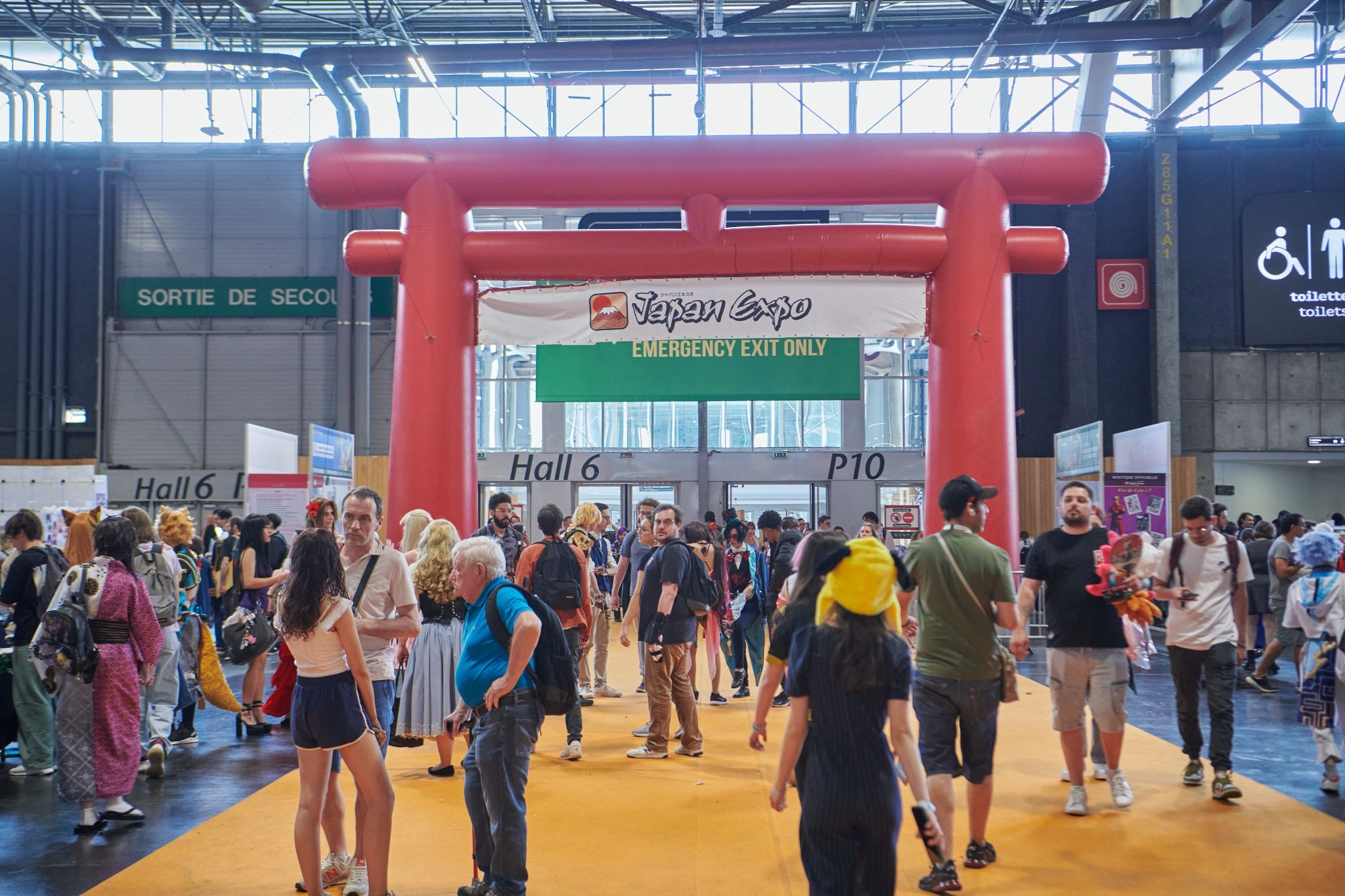
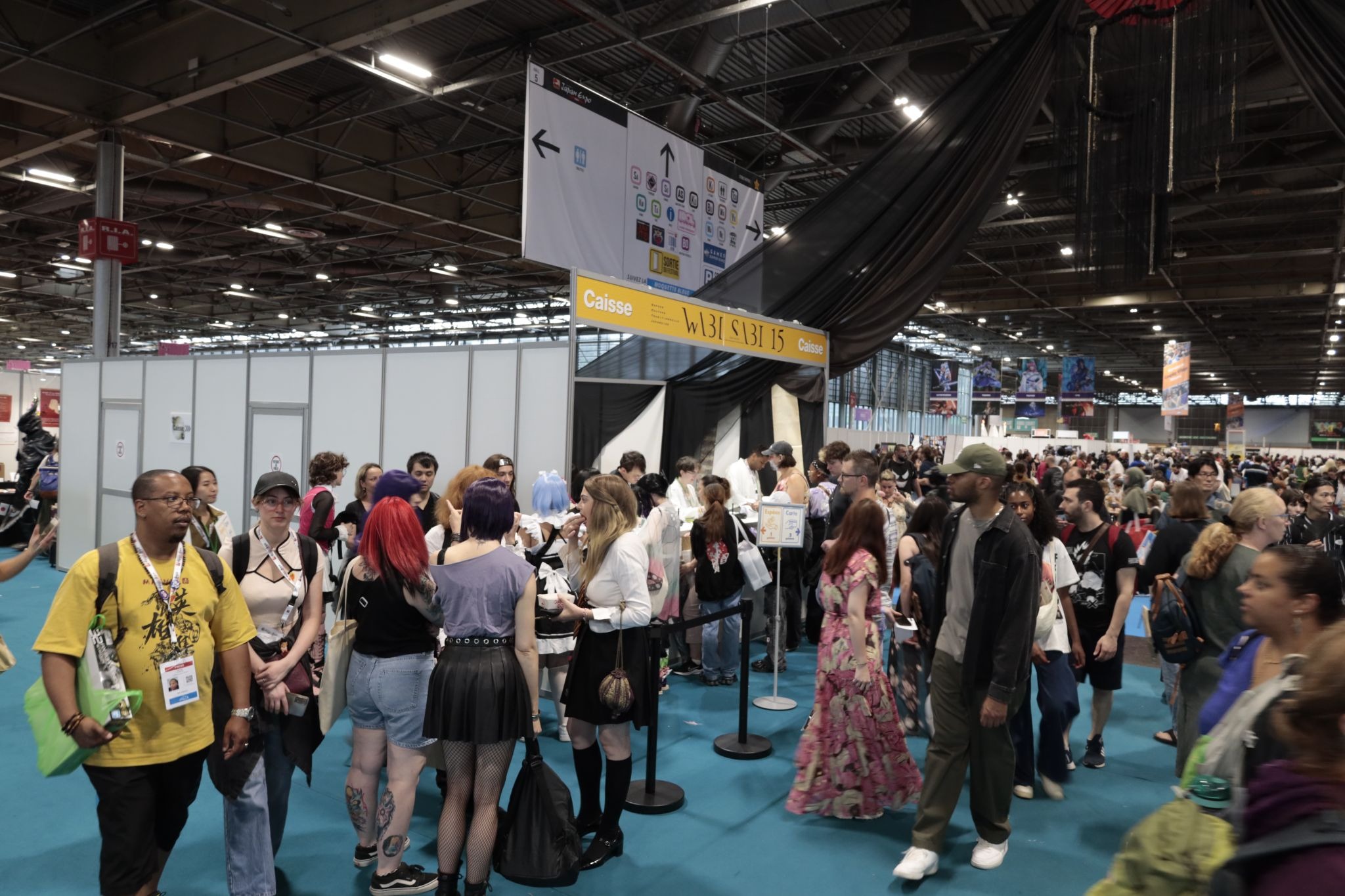
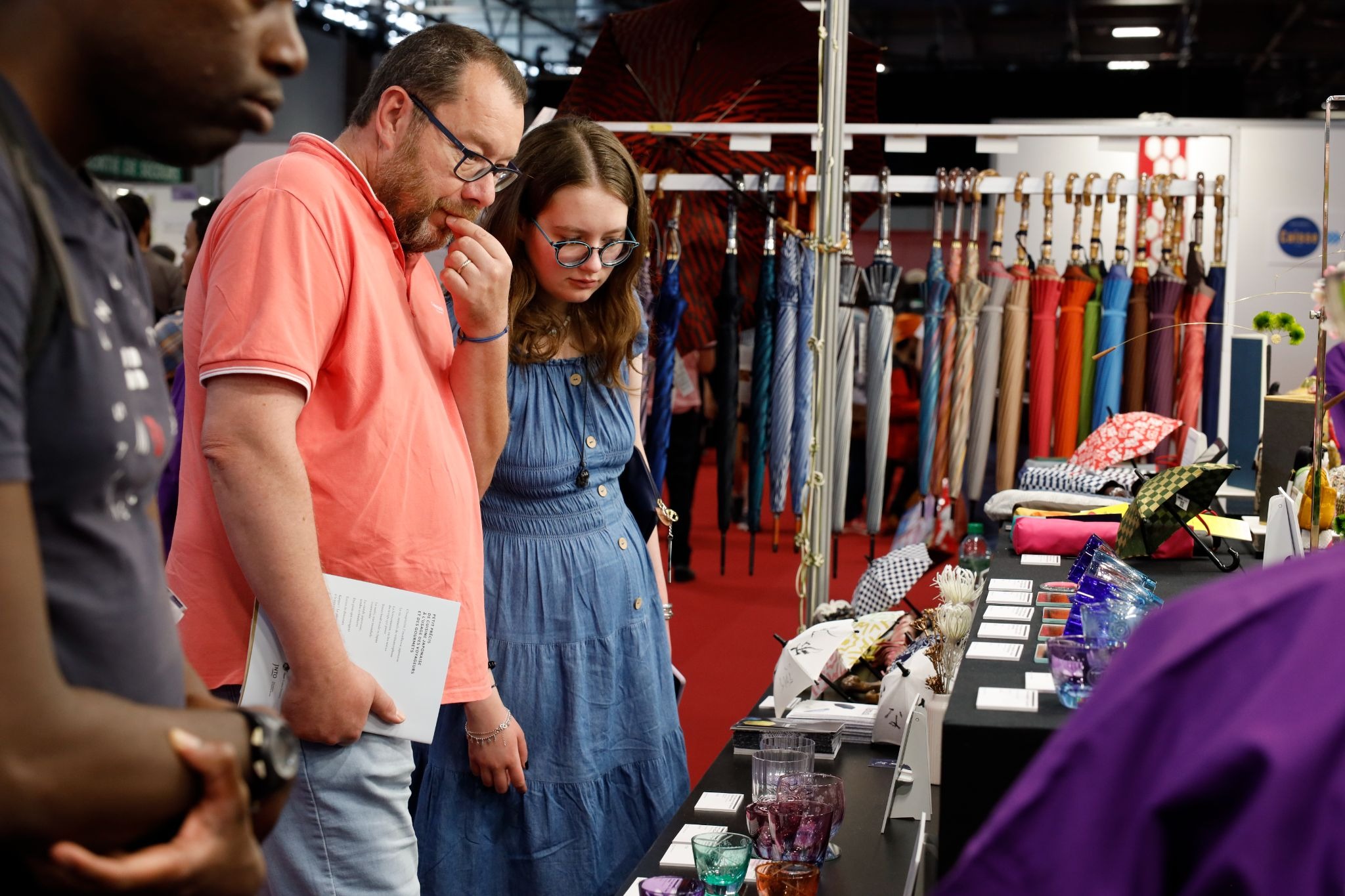
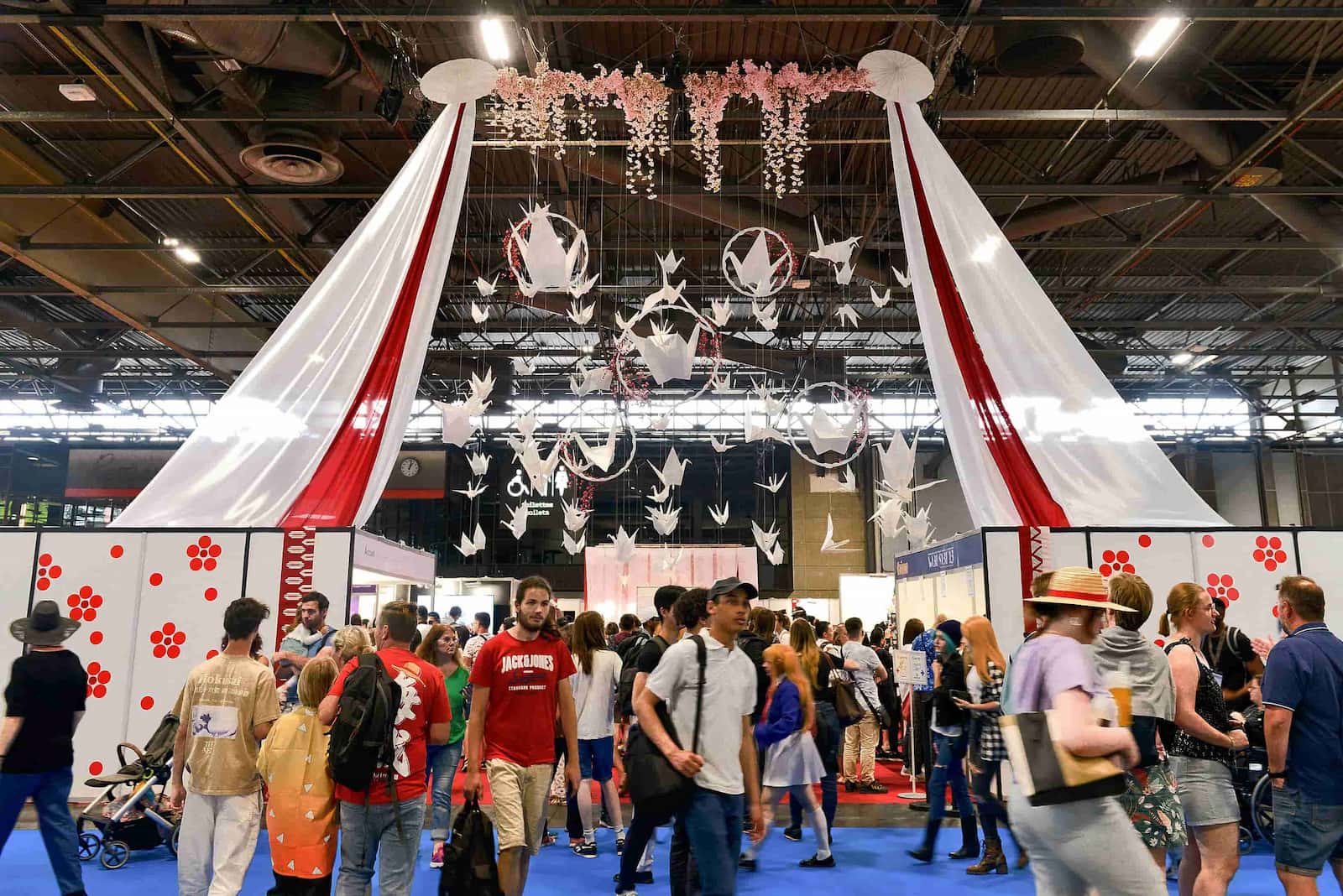
The most common B2C event we attend is the annual "Japan Expo" in Paris. It's a massive event covering Japanese manga, anime, and culture in general, with a venue area of approximately 150,000 square meters, roughly the size of four Tokyo Domes. It attracts around 200,000 visitors annually.
Within this Japan Expo, our company sets up a section under the brand "WABI SABI," where we exhibit and sell Japanese traditional crafts and Japanese-style goods. It has become recognized as the most popular booth after Nintendo.
Do you also sell items at the exhibitions?
Yes, we do. Beyond just selling, it's also crucial to build connections with customers. With 200,000 people attending who want to meet Japanese artists, we gain many social media followers. These connections can lead to online purchases later on.
Related article:Japan Expo Paris [Traditional Crafts] Exhibition Case Study 2025
What about B2B exhibitions?
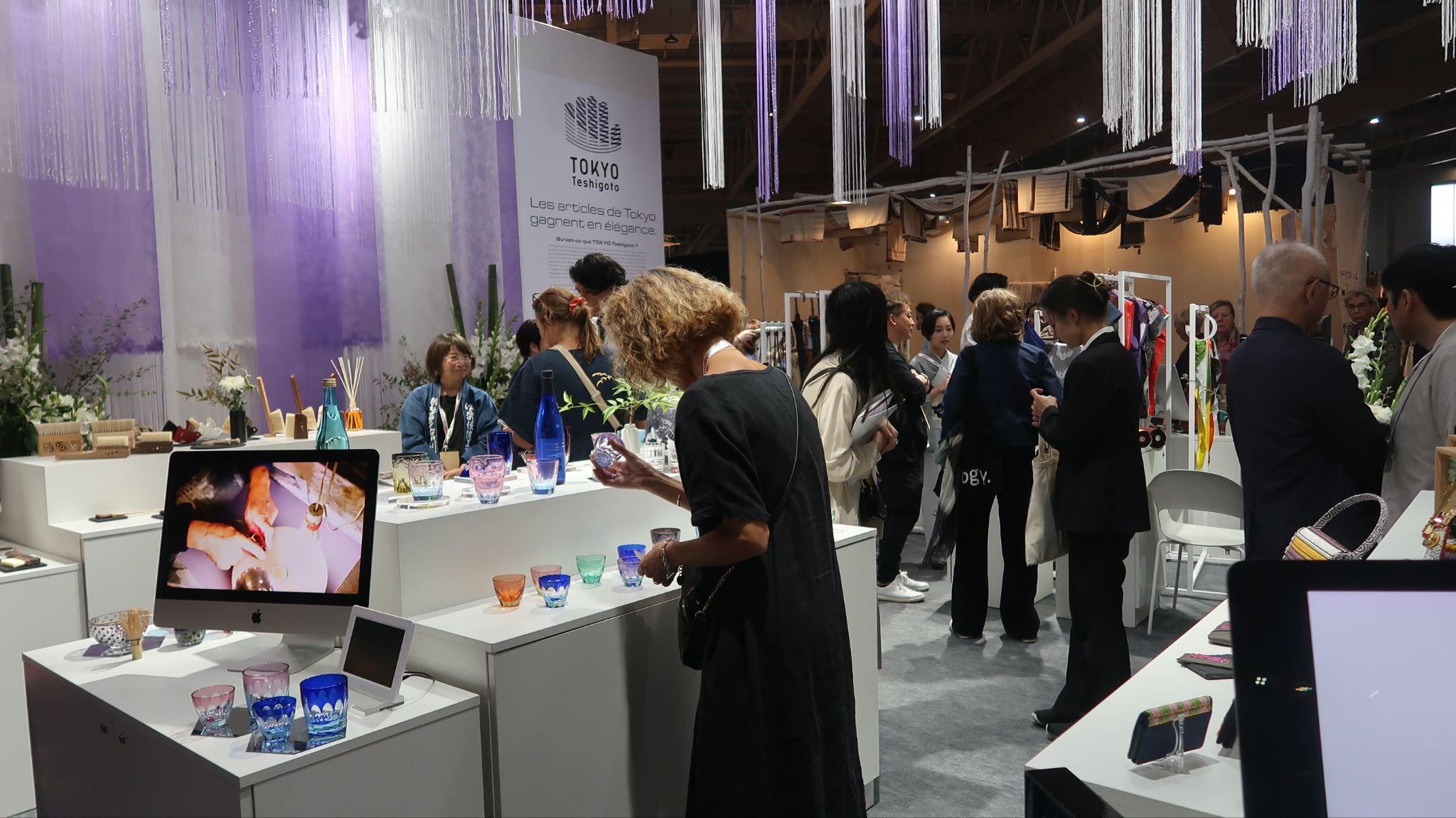
Paris's "Maison&Objet" is a prime example. For B2B, the visitors are global retail buyers, so the strategy is completely different. They own shops and are looking for products that will fit their specific stores.
Simply placing products in a "Japanese-style room" setting won't resonate with buyers. What they ultimately envision is the living space of an overseas end-user. We need to present products in a way that naturally blends into that environment.
Do you also provide that kind of advice?
Yes, we do. A common example we use is chopsticks. While there are many people worldwide who love Japan and want to buy such items, eating Japanese food with chopsticks every day at home is difficult unless you're a very dedicated fan. On the other hand, items like cups or small accessories that can be "integrated one by one" into a normal lifestyle, say in Germany, tend to sell well initially.
What's interesting, though, is that sometimes things we thought wouldn't sell well end up selling incredibly, and vice versa. So, while we provide advice and direction, we also value the artisans' desire to "introduce this particular item." We aim to find a presentation method that accommodates both.
High-priced items, even if they don't sell themselves, can serve as a symbol of the manufacturer's capability, and displaying them alongside other products can sometimes boost sales of those other items.
Do high-priced works sell well overseas?
There's potential. For example, even Living National Treasures often create items in more accessible price ranges because focusing solely on expensive works isn't sustainable as a business. On the other hand, items in the 2-3 million yen range have the potential to sell as "art pieces" rather than "household goods." If they can reach wealthy overseas individuals knowledgeable about Japanese crafts, or even those who aren't Japan fans but purchase art, I believe there's a sufficient market.
How far does your support for exhibition participation extend?
There's a truly extensive list of tasks required for exhibiting. It starts with product selection and strategy planning, then moves to export arrangements, exhibition booth design and production, local staff arrangements, planning demonstrations and experiences, supporting negotiations with buyers, drafting contracts after orders are received, collecting payments (including acting as an agent for overseas remittances), and arranging exports for delivery. We support all of these.
I'm surprised you handle payment and tax procedures as well.
For example, if a Japanese artisan carries products to France and receives cash in euros, they can't simply bring that cash back to Japan. There's no system to accept card payments locally, nor can they handle tax payment procedures in that country. So, our company acts as an agent for sales payments in France, handles accounting declarations and tax payments there, and then delivers the sales revenue to the Japanese side in a way that can be properly recorded in their books.
We have staff at overseas bases and have established cooperative relationships with companies capable of handling local accounting in various countries.
What are the particularly challenging aspects?
None of it is easy, really (laughs). However, some buyers place orders on the spot. The challenge lies in how to maintain communication with buyers who liked something but left without ordering. That's what we prioritize most.
How do you handle communication, such as language barriers, during these times?
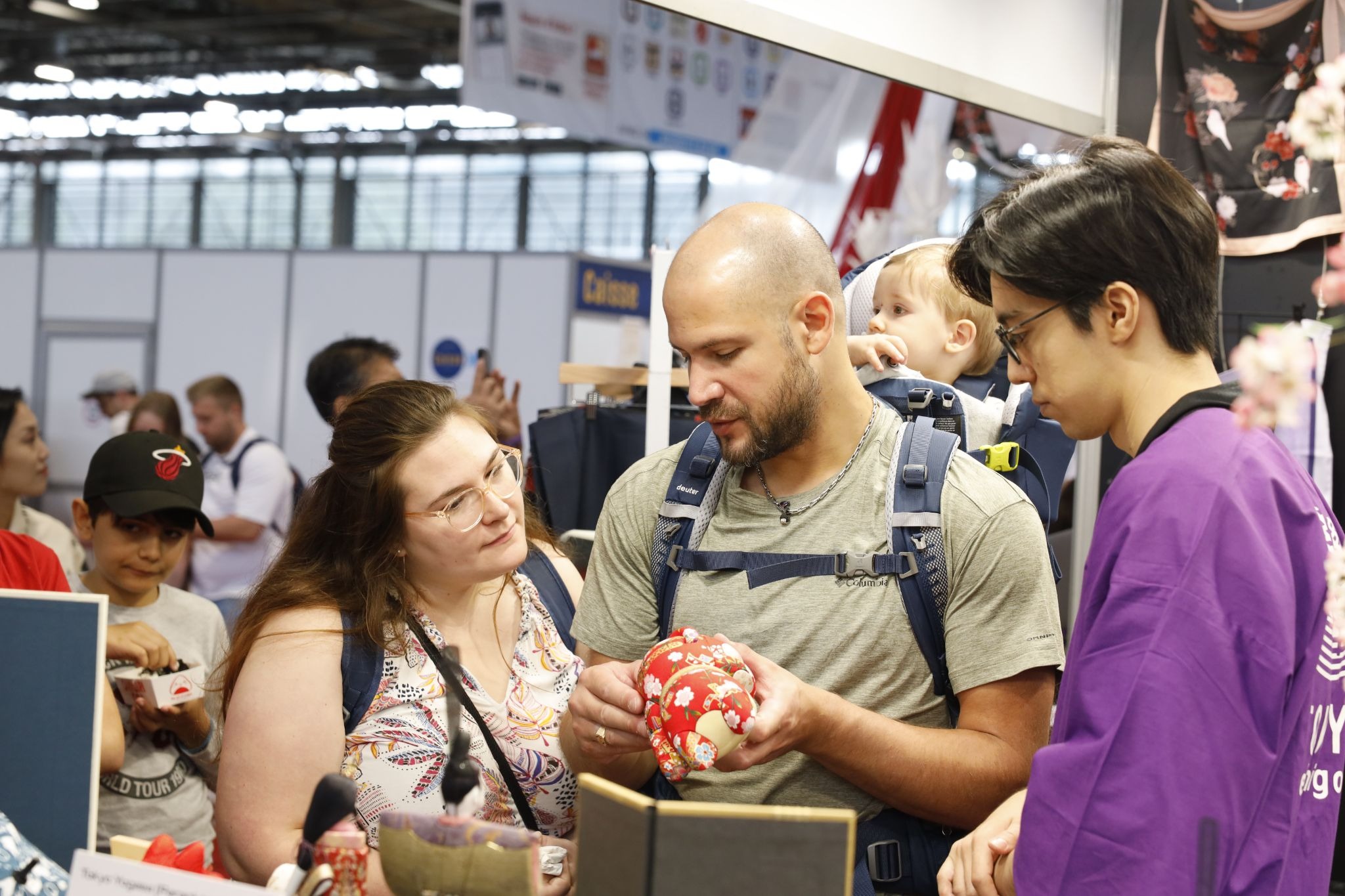
We arrange local bilingual staff as needed. However, what we value is that they are not "mere interpreters." We can provide staff who love Japanese culture and are motivated to introduce it in their own words. This means that even if the artisan leaves the booth, the staff can continue sales on their own.
Buyers might order 1,000 or 2,000 units. Can Japanese manufacturers handle such orders?
Especially with OEM (manufacturing products for other brands) orders, it definitely takes time. We've had cases where delivery took eight months. Throughout that period, we continuously mediate discussions like "this is possible" and "this is difficult." Once closed, our company drafts the contract, handles overseas remittances, and manages export arrangements.
Have there been any cases of failure or major mistakes that led to a breakdown in negotiations?
So far, there haven't been any major mistakes that led to a breakdown in negotiations after they started. However, it does happen that buyers who say "I'll place an order" at an exhibition booth later disappear without contact.
Do you have any success stories? Have any artisans become independent?
Yes, we do. Some artisans have seen their overseas sales account for nearly half of their total revenue. Some have achieved this after just four exhibitions.
Do you support them until they become independent?
Yes, I believe there are phases. Initially, the goal is to "sell one item." As they continue to exhibit, the ideal outcome is for them to eventually be able to go to their preferred country, find business partners, and handle contracts and deliveries themselves.
Our company supports all the intermediate stages. The focus of our support changes between an artisan exhibiting for the first time and one exhibiting for the third time. We carefully assess this and provide support tailored to each stage.
Isn't it quite costly?
Yes, with the current weak yen, going overseas and arranging various things can be expensive. It's true that there's an investment aspect at the beginning.
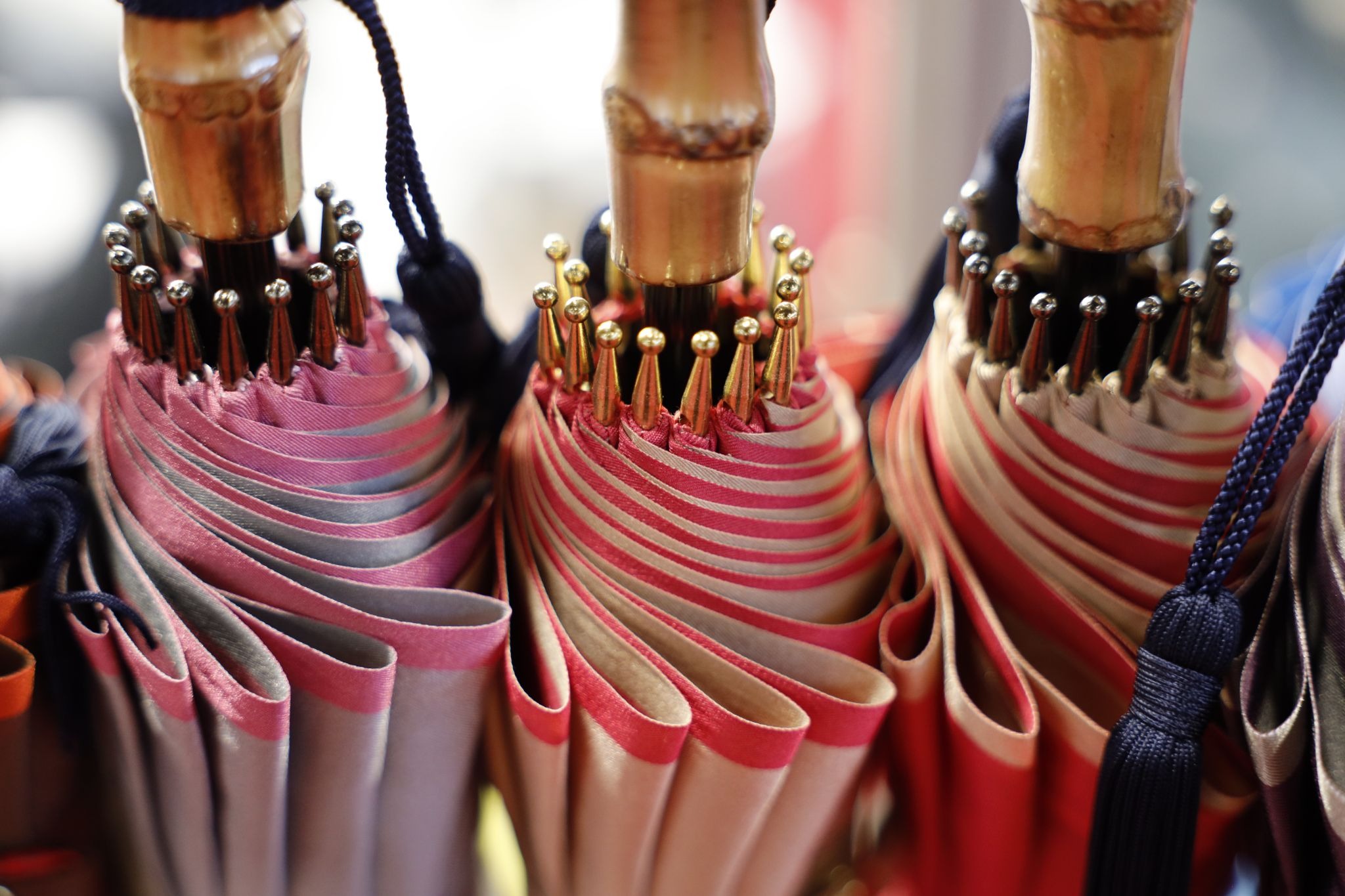
However, in successful cases, there have been instances where sales from a single exhibition reached tens of millions of yen, or where orders received later, not sold on the spot, exceeded 10 million yen. Not all cases, but such success stories do exist.
Related article:[Case Study] The Secret to Securing Large Orders for "Traditional Crafts" at Overseas Exhibitions
Is it necessary to localize for overseas markets from the start?
I don't believe it's necessary to localize from the very beginning.
There are often consultants who say, "Let's customize products for Germany," but I've rarely heard of that working out well. Our stance, on the contrary, is that "if you take what you're currently making as is, there will definitely be something that sells." You can consider localization once sales have reached a certain level.
Do you also advise on pricing for exhibitions?
Yes, we do. We generally think in three stages: the price in Japan, the price at overseas exhibitions, and the price at local retail stores.
The exhibition price is the Japanese price plus local taxes and our fees, typically 1.6 to 1.8 times the Japanese price. When local distributors and retailers are involved, it usually becomes 2.5 to 3 times the Japanese price.
What potential do you see for Japanese crafts overseas?
Previously, promotions for traditional crafts often emphasized "These are fine Japanese products," "They have a rich history," and "They showcase artisan skill." However, there are limits to that approach alone.
Considering buyer needs, current lifestyle and interior trends are changing. A while ago, "pure white spaces, simplicity like an Apple Store" was popular. But now, there's a demand for things like texture, warmth, and coziness.
Another significant change is that choosing items with "individuality, uniqueness, and a story" has become more valued than simply "owning famous brand-name goods." Japanese traditional crafts possess the nature and history of their region, unique materials, and techniques passed down since the Edo period. Buyers can talk about these items, choosing them as an expression of themselves. I believe this is where they can win against famous brands.
Is that for the domestic market? Or overseas? Is it the same domestically?
Overseas, unfortunately, I feel that this sensibility is far more widespread than in Japan. Japanese people still tend to prefer things that are socially recognized. Abroad, you'll find people buying paintings on street corners, but that's rare in Japan. Many people overseas are able to decide for themselves, "I like this, and it has value to me."
On the other hand, traditional crafts are very suitable as gifts. They have a story, which conveys that you "put a lot of thought into choosing it." I believe that's a value that resonates both domestically and internationally.
── What is the current situation of traditional craft production areas?
During the Showa era, there was a good period when local customers frequently purchased our products. However, those customers have aged, and younger generations are less inclined to buy.
Currently, young artisans and older artisans coexist, but for the older generation, business has become truly challenging. Many are at a crossroads, wondering whether they should continue and pass on their craft to the next generation. They still don't know how much demand there is overseas.
So, for example, if you take what you're currently making to Japan Expo, 200,000 visitors will come to your booth, pick up your items, and be deeply moved.
That experience is truly significant for the creators. Just knowing that "there are still so many people who desire these items" makes a huge difference in their motivation to continue. I believe that expanding overseas is not just about market expansion; it's directly related to the very continuation of traditional crafts.
In this interview, we reported on how Japan Promotion's representative, Ikushima, discussed the mechanisms and philosophy behind his support for Japanese craft artists and businesses in their overseas expansion.
Are you interested in expanding overseas but don't know where to start? If so, please feel free to contact us. We offer a wide range of support, from consultations on exhibiting at trade shows to website creation and export/sales assistance.
How does it look from the European "buyer's and observer's" perspective? Read the second part of the article here:Potential and Challenges of Japanese Traditional Crafts ── Interview with a German Researcher [Part 2]




![Japan Expo Paris [Corporate Exhibitor] Success Stories 2026](https://cdn.prod.website-files.com/679a0f0767ddc89953624c39/6a865ca727ba3168f7ace9a4_main1200_675_article413_DSC1221.webp)
![Japan Expo Paris [Artist Exhibition] Support Case Studies 2026](https://cdn.prod.website-files.com/679a0f0767ddc89953624c39/6a87ff8ae266d4dbdaccce45_main_article416__DSC4858.webp)